GEAR TALK
The Orange AD200 Bass MK3: The Amp That Refuses to Be Ignored
There are amps you buy because they're practical. And then there are amps you buy because they make you feel something the moment you plug in.
The Orange AD200 Bass MK3 is firmly in the second category.
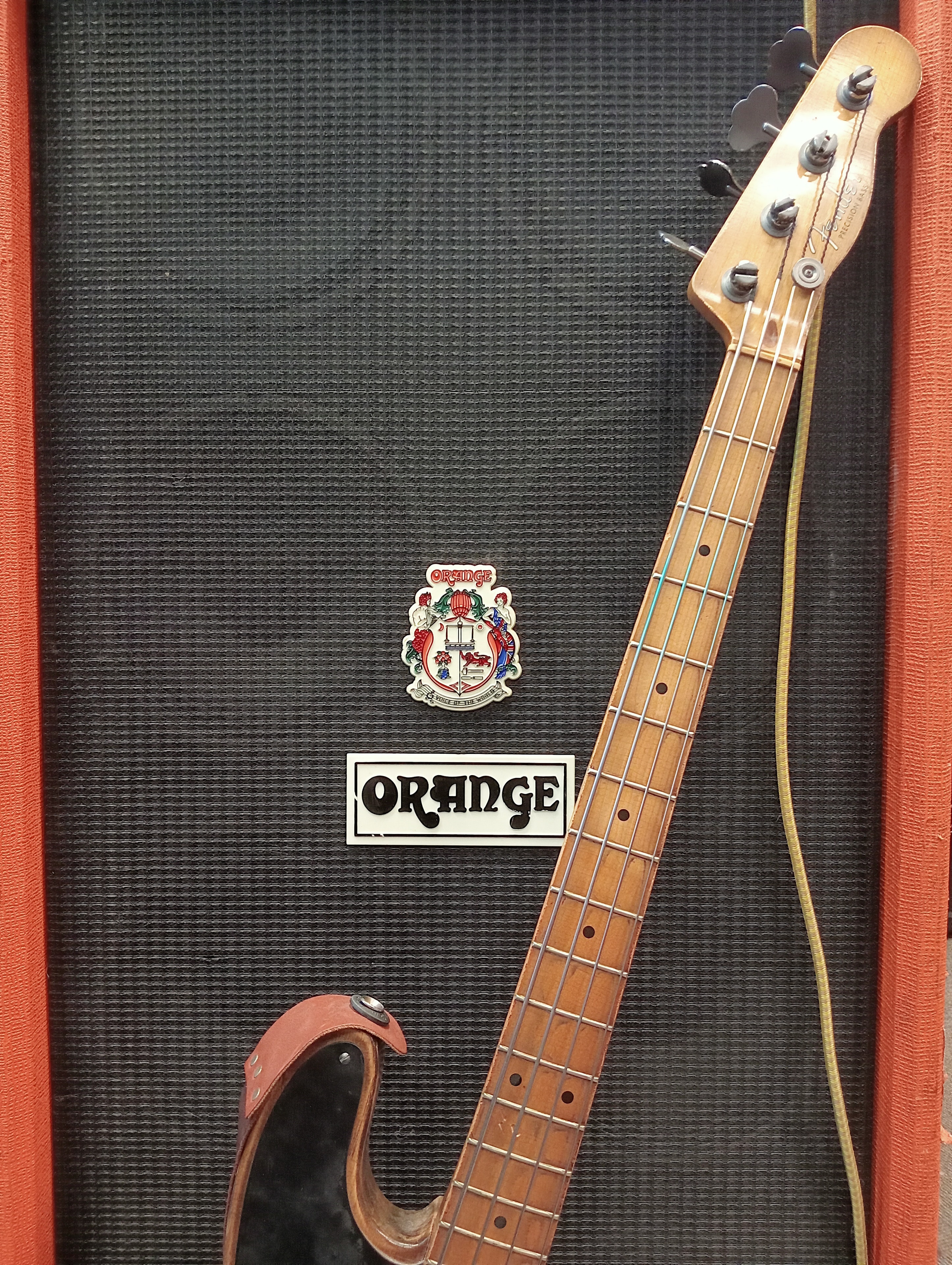
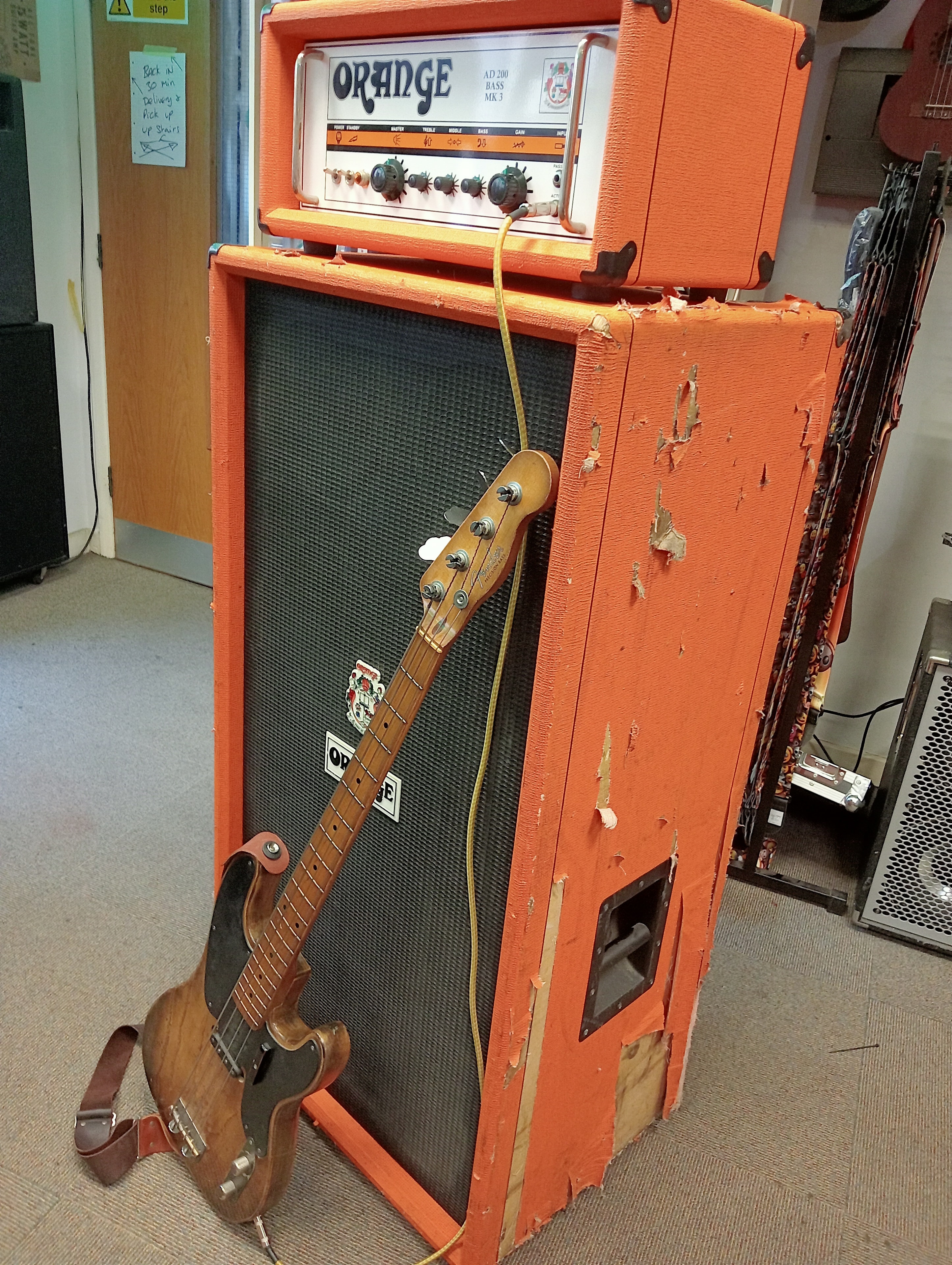
This particular head lives in the shop — it's ours, it's not going anywhere, and it gets played regularly. Paired with a battle-scarred cab whose exact vintage remains a mystery and a stripped natural Fender Precision Bass, it is one of those combinations that makes you stop what you're doing and just listen. So we thought it deserved a proper write-up.
A Bit of Orange History
Orange Amplification was founded in London in 1968 by Cliff Cooper, initially as a music shop on Denmark Street — the legendary "Tin Pan Alley" of the British music industry. The amps came almost by accident: Cooper started building them to sell in the shop, and within a few years they'd found their way onto stages with Fleetwood Mac, Jimmy Page, and a generation of British rock acts who needed something louder and more characterful than what was already available.
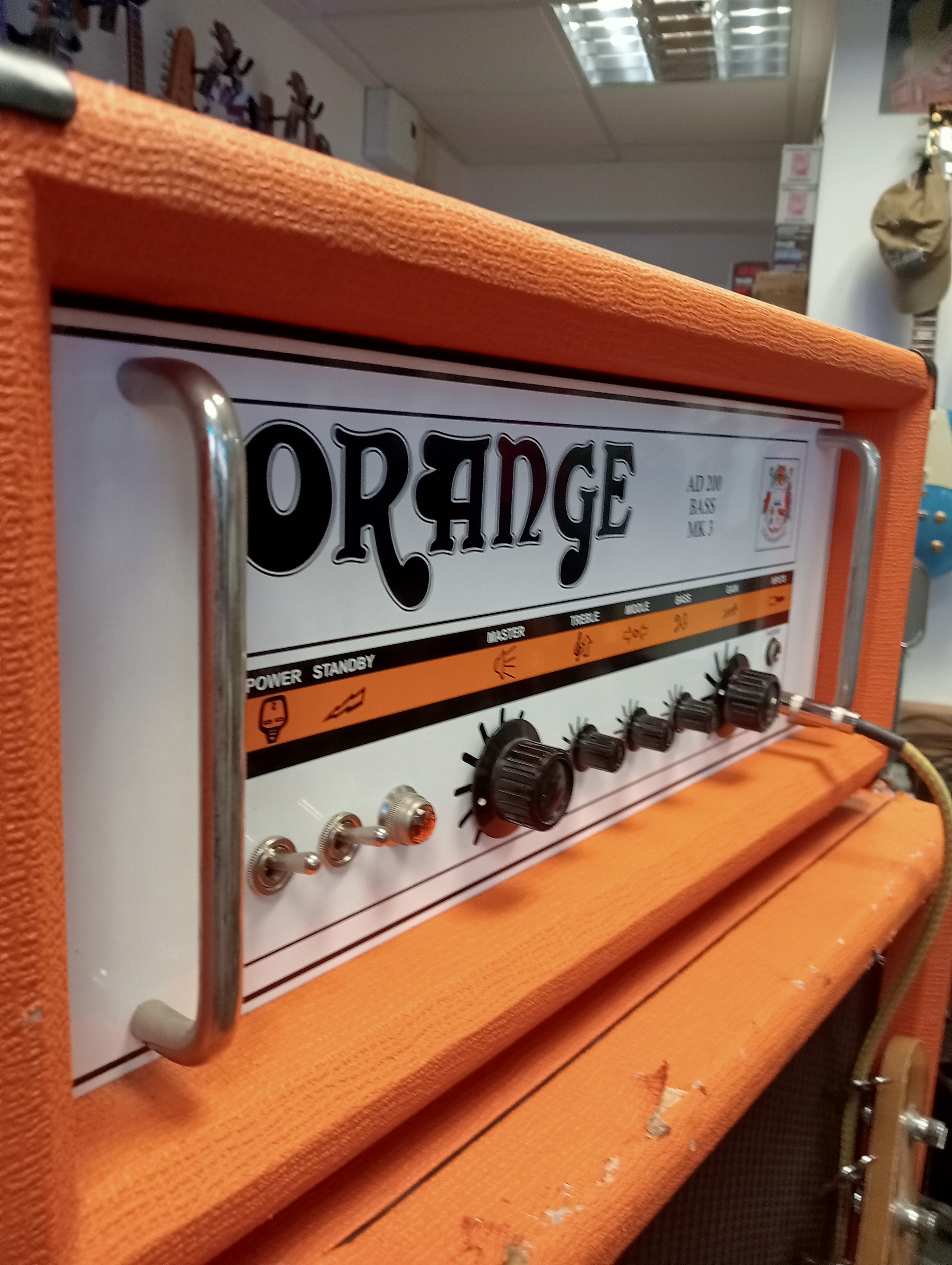
The brand's distinctive look — that deep orange tolex, the pictogram controls, the chicken-head knobs — wasn't just aesthetic. It was a statement of intent. Orange amps were built to be different, and they sounded different too: thick, warm, and harmonically rich in a way that set them apart from the brighter, more aggressive character of contemporary Marshall designs.
The bass-specific range came later, but when Orange committed to it, they committed properly. The AD200 is the result of that commitment.
What the AD200 Actually Is
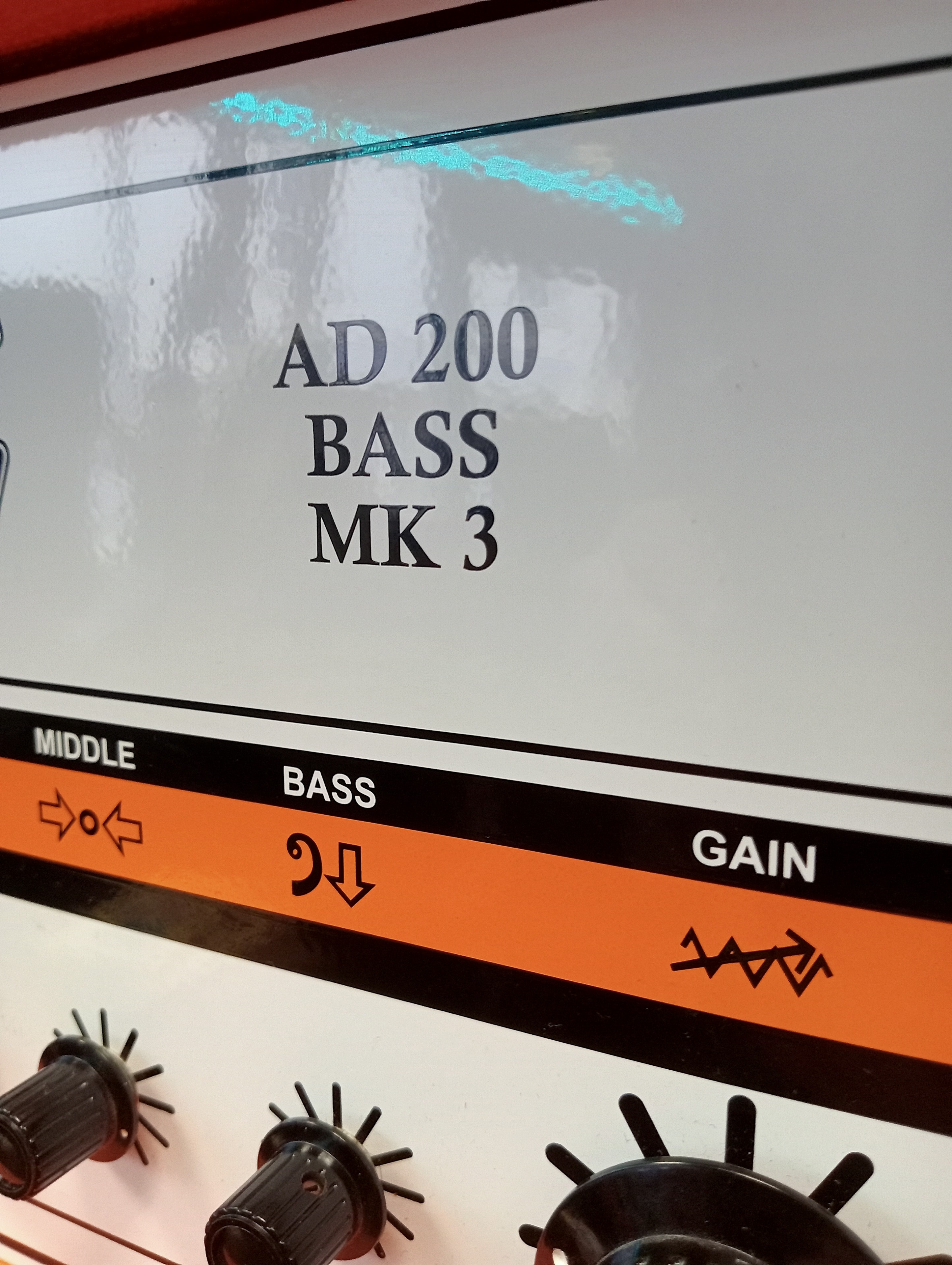
The AD200 Bass MK3 is a 200-watt all-valve bass head. That's not a marketing figure — it's a genuine 200 watts of valve power, produced by four KT88 output tubes running through a massive custom-wound output transformer.
The preamp section uses three ECC83 (12AX7) valves and keeps the control layout deliberately simple: Volume, Bass, Middle, Treble, and a Gain control. That's it. No effects loop, no built-in compression, no digital modelling. Just a valve preamp feeding a valve power section, and then whatever cab you choose to throw at it.
That simplicity is the point. The AD200 is not trying to be everything to everyone. It is trying to be one thing — the best possible all-valve bass tone — and it succeeds completely.
The KT88 output tubes are worth talking about. Most guitar amps use 6L6 or EL34 valves; the KT88 is a larger, more powerful tube traditionally associated with hi-fi amplification and high-end audio. In a bass context, the KT88 delivers extraordinary low-end authority and a natural compression on the attack that makes every note feel planted and deliberate. It's the reason the AD200 sounds the way it does, and it's the reason no solid-state amp has ever quite replicated it.
The Mystery Cab
The cab in these photos is the interesting part of the story, and honestly we don't have the full answer yet.
The tolex wear tells you it's been gigged hard — the corners are rounded off, the covering has lifted in places, and the grille cloth has that particular faded quality you only get from years of stage smoke and van journeys. It's a 4x12 bass cab, loaded with what appear to be original drivers, and it sounds absolutely enormous.
We haven't pinned down the exact year yet. The construction details suggest somewhere in the 1970s, but Orange's production records from that era are patchy at best, and the cab has clearly been repaired and modified at some point in its life. If you know your vintage Orange cabs and you spot something in the photos, we'd genuinely love to hear from you.
What we can tell you is that it pairs with the AD200 head in a way that feels completely natural — like the two were always meant to be together. The low end is full without being muddy, the mids cut through without being harsh, and there's a physical presence to the sound that you feel in your chest before your ears have fully processed it.
Plugging In the Precision
The bass in these photos is a Fender Precision — stripped back to natural wood, which gives it a slightly different resonance and sustain character compared to a lacquered body. The Precision Bass and the Orange AD200 is one of those pairings that makes complete sense the moment you hear it.
The P-Bass's split single-coil pickup is warm, punchy, and slightly compressed by nature — exactly the kind of signal that a KT88-powered valve amp loves to work with. You get that classic thump on the low strings, a clear and present midrange, and a top end that's present without being brittle. Wind the Gain up and the whole thing starts to breathe and push in a way that no digital amp sim has ever convincingly captured.
For reference: this is the combination that defined the sound of countless British rock and metal records. Not because it was fashionable, but because it works.
Why the AD200 Matters in 2026
The used valve amp market has shifted significantly over the past few years. Prices on classic British heads — Marshalls, Hiwatts, early Oranges — have climbed steeply as players and collectors have woken up to the fact that these things aren't being made the same way anymore.
The AD200 MK3 sits in an interesting position: it's a current-production amp (Orange still makes it), but it's built to a standard that most modern gear doesn't attempt. The transformers are custom-wound, the build quality is exceptional, and the circuit design hasn't been compromised in the name of cost reduction. You can buy one new, or you can find earlier MK1 and MK2 versions on the used market — both are worth serious consideration.
For a serious bass player who wants a head that will last decades and sound better the harder you push it, the AD200 is one of a very small number of amps that genuinely justifies its price tag.
Come and Hear It
The AD200 and the mystery cab live in the shop. If you're local and you want to hear what 200 watts of valve bass actually sounds like through a 4x12 that's been around the block, come in and we'll plug it in. Bring your own bass if you want — the Precision will be there too, but there's something to be said for hearing your own instrument through a rig like this.
We're at Marshland Guitars, 6 High Street, Downham Market, PE38 9DB. Give us a ring on 01366 384 362 or 07766 253317 before you make the trip and we'll make sure someone's about.
Photos